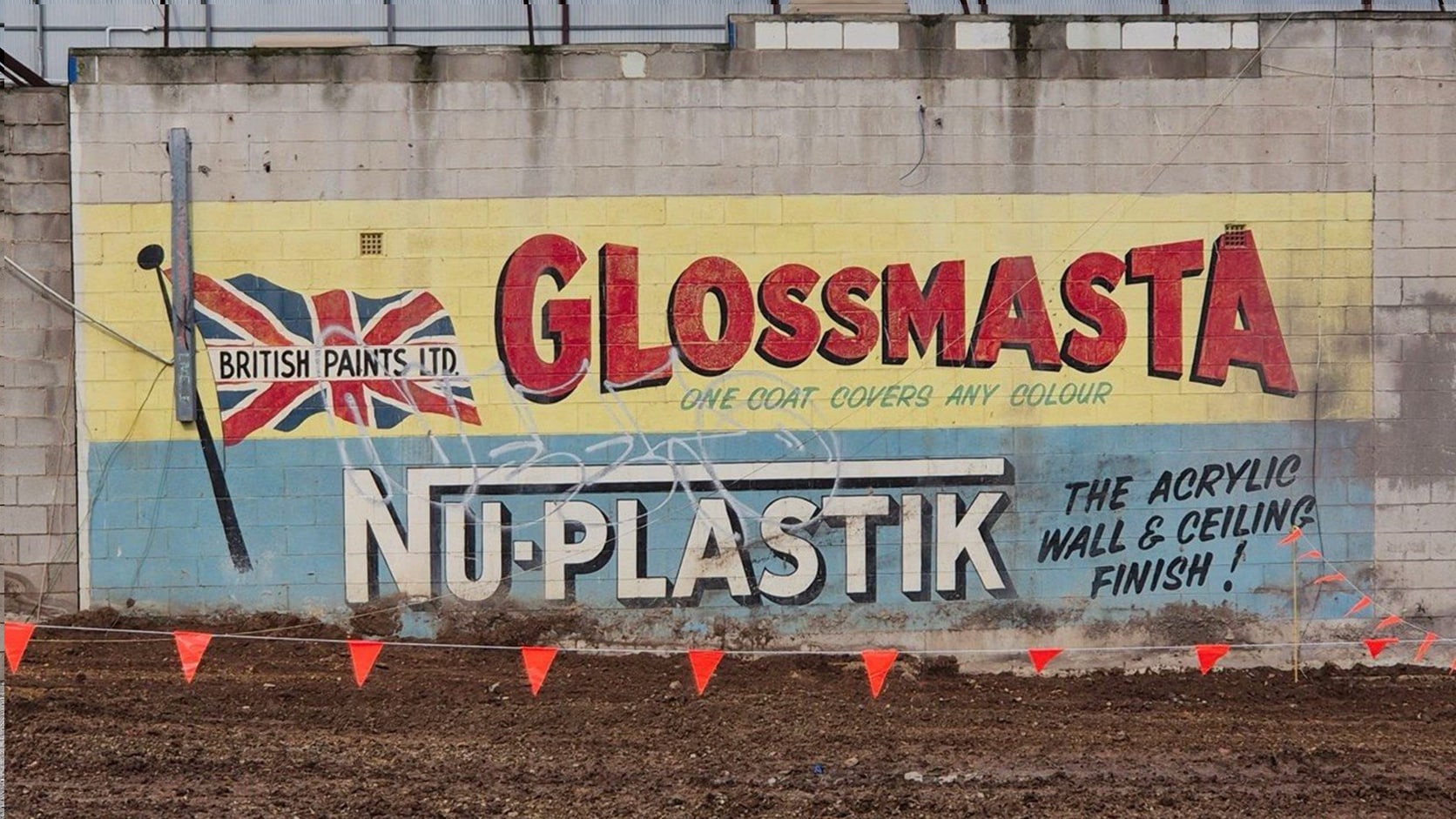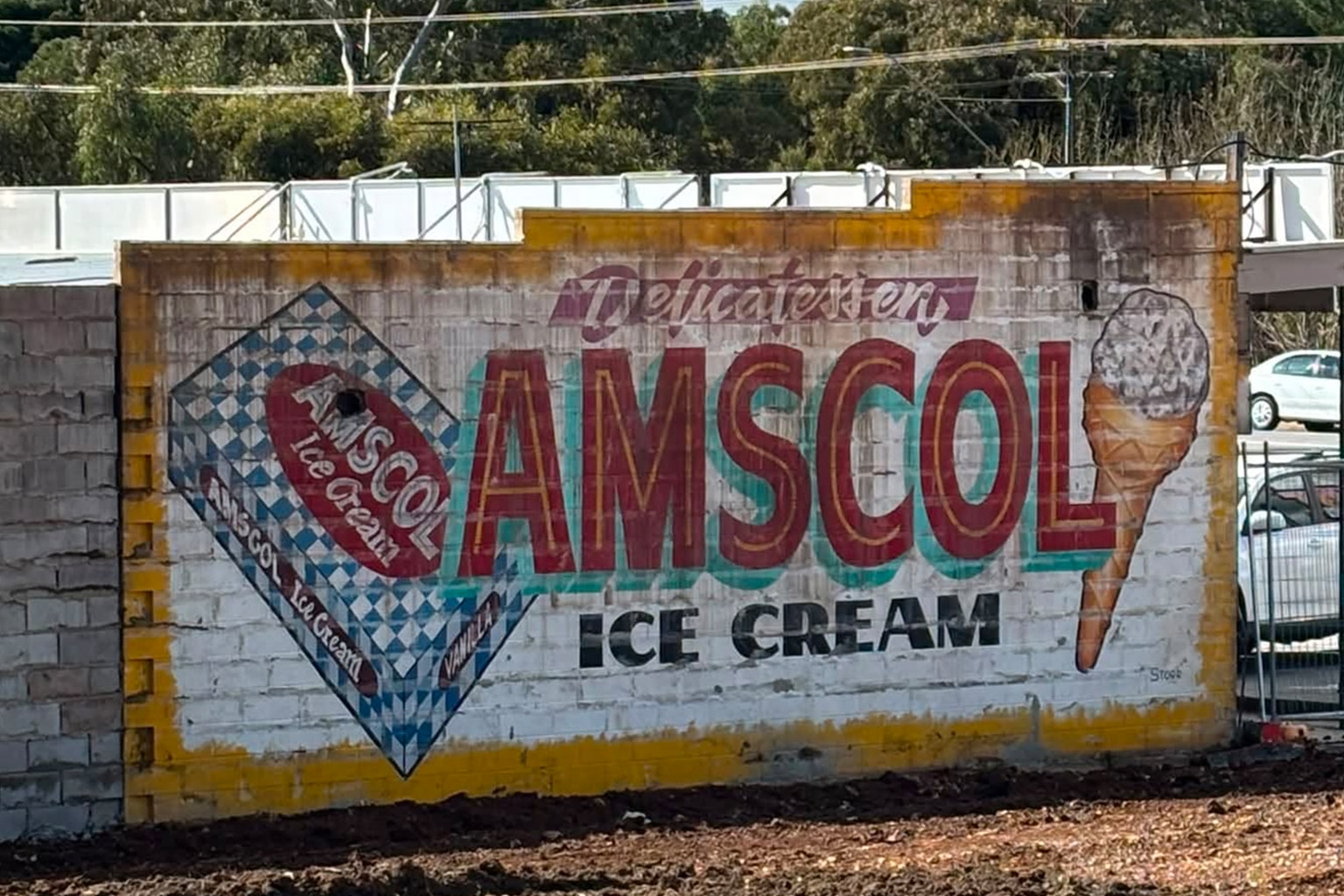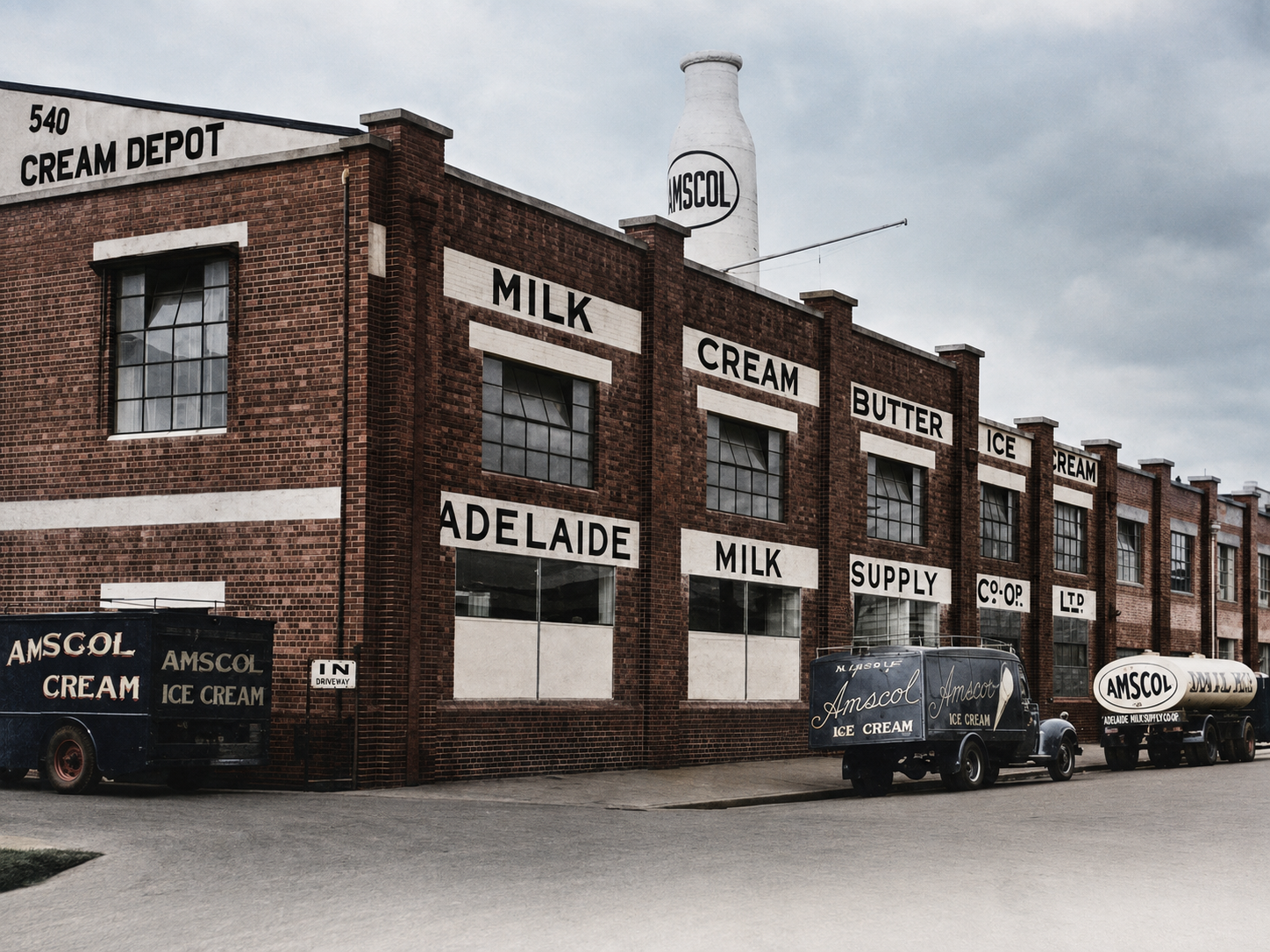
Last week, the demolition of two old buildings unexpectedly uncovered a pair of beautifully preserved painted advertisements — classic “ghost signs” that had been hidden for decades. One promotes the iconic South Australian brand Amscol Ice Cream, while the other advertises British Paints Glossmasta and Nu-Plastik.
These hand-painted murals are wonderful windows into mid-20th-century Australian commercial life. Here’s the story behind each discovery.
The Amscol Ice Cream Sign
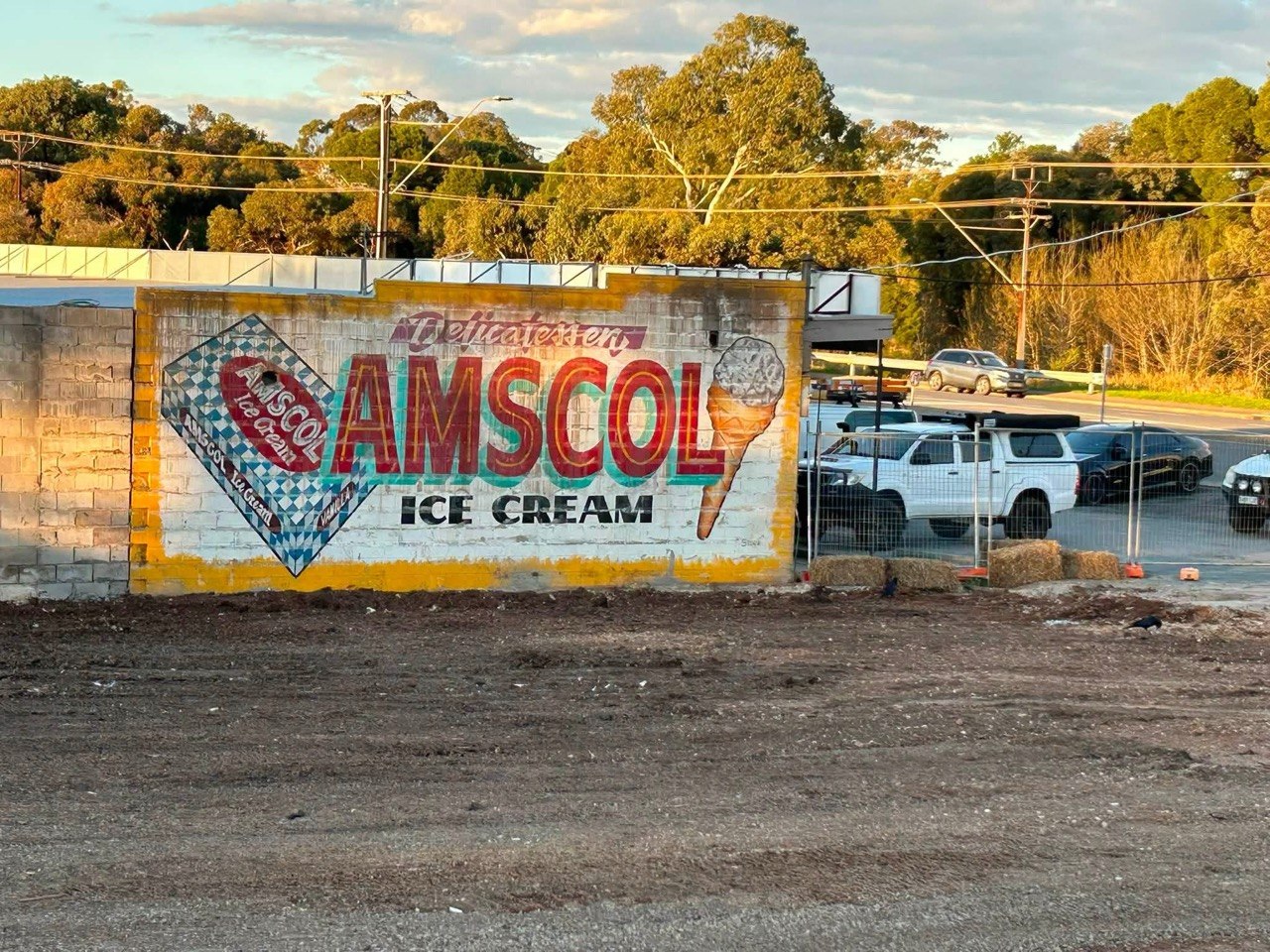
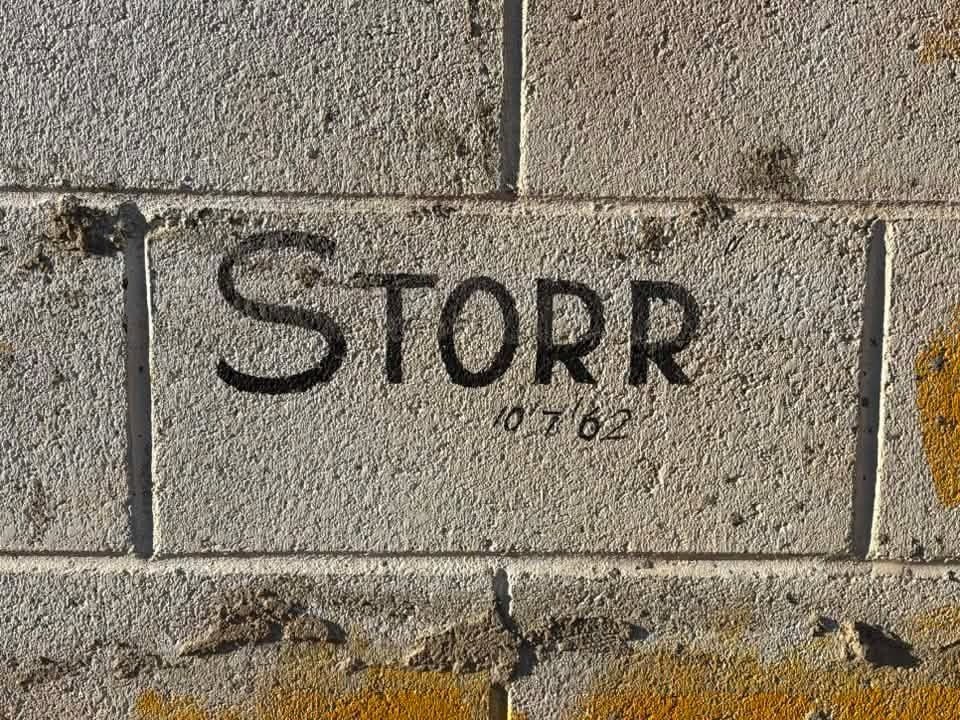
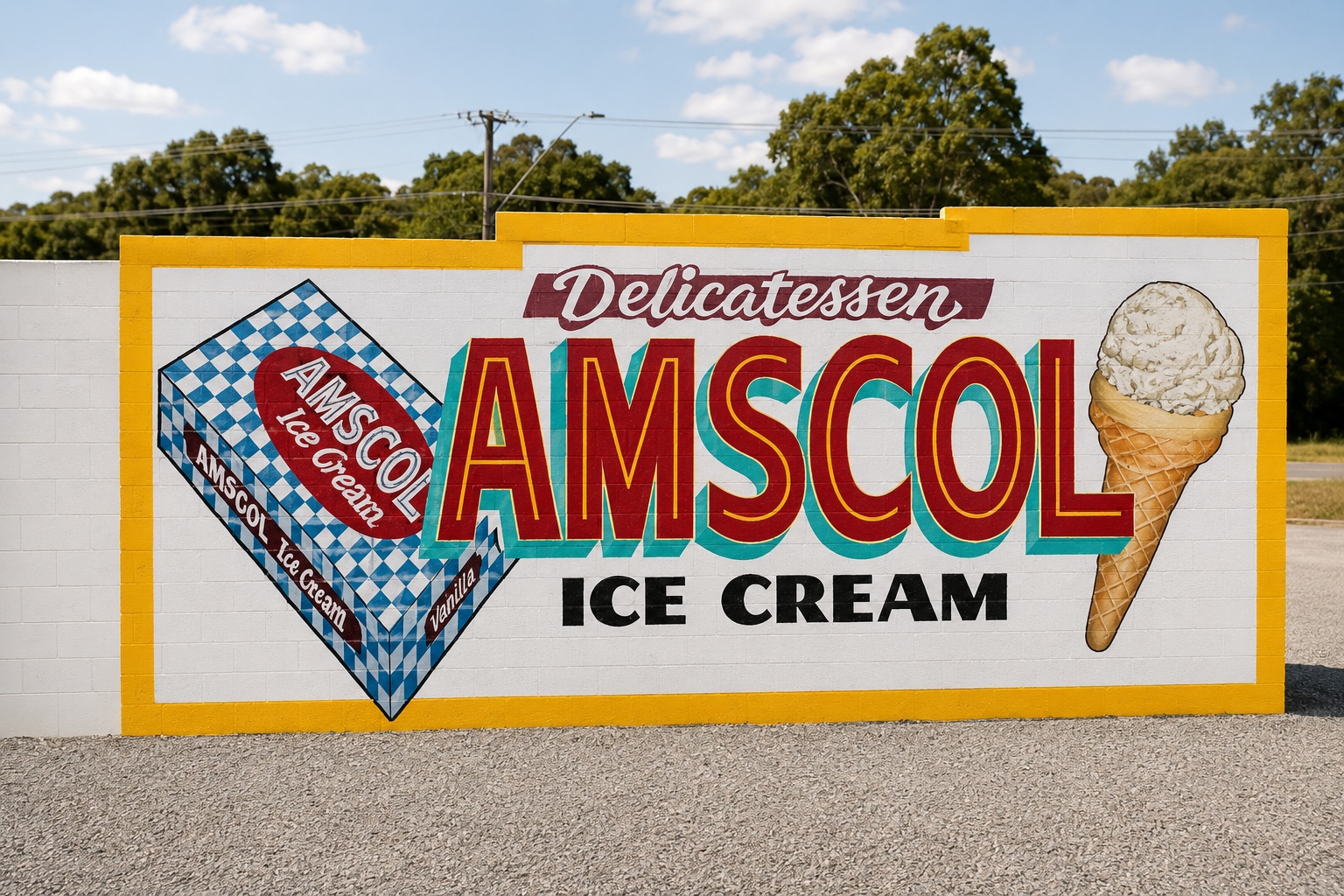
The first mural features the familiar diamond-shaped Amscol logo, bold red lettering spelling out “AMSCOL”, an ice-cream cone, and the word “Delicatessen”. It is a classic example of the colourful advertising that once covered many Adelaide walls.
Amscol (Adelaide Milk Supply Co-Operative Limited) was founded in 1922 by local dairy farmers who took over the Beauchamp Bros milk business. From its factory on Carrington Street in the city, the cooperative became a household name across South Australia.
While it produced bottled milk, cream, butter and cheese, Amscol is best remembered for its ice cream. Popular products included the famous ice-cream “bricks” that fitted neatly into early refrigerator freezers, Dandies (small cups), Twin Chocs, Eskimo Pies, Berry Bars, and later decorative tins with flavours such as Dutch Treat chocolate. The company’s slogan was the memorable line: “It’s a food, not a fad.”
In 1978 the business was acquired by Farmers Union and Dairy Vale. In 1982 the remaining operations, including the ice-cream side, were sold to Streets (Unilever). The Carrington Street factory closed soon after and was later demolished for housing.
The brand rights were later purchased by South Australian businessman Stewart Kay, who briefly revived Amscol ice cream at the retro diner Cherry Burger at Colonnades Shopping Centre around 2019. That revival was short-lived, and the brand has remained largely quiet since.
Finding a well-preserved Amscol mural is a rare treat for anyone who grew up in Adelaide during the mid-20th century.
The British Paints Glossmasta & Nu-Plastik Sign
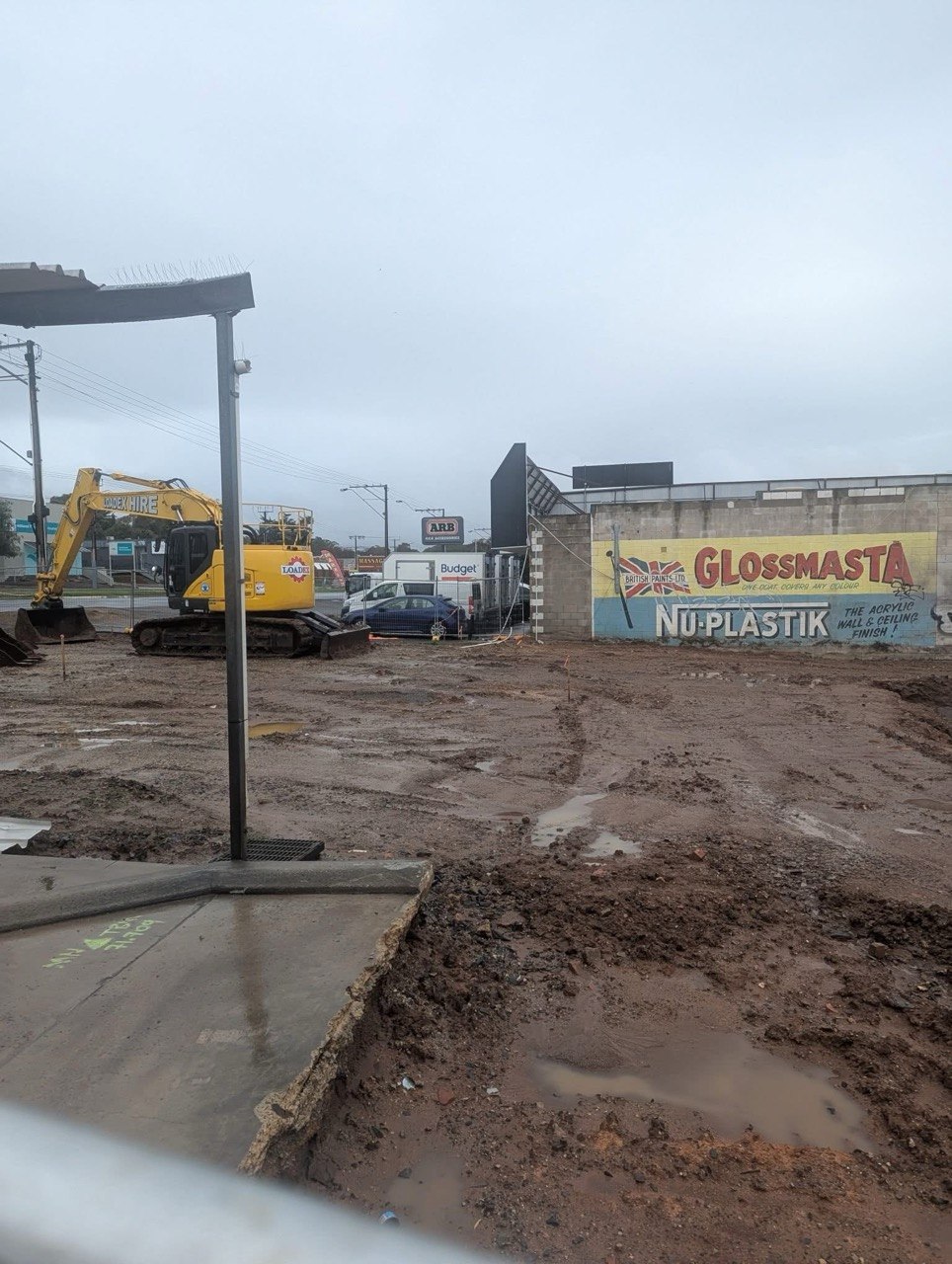
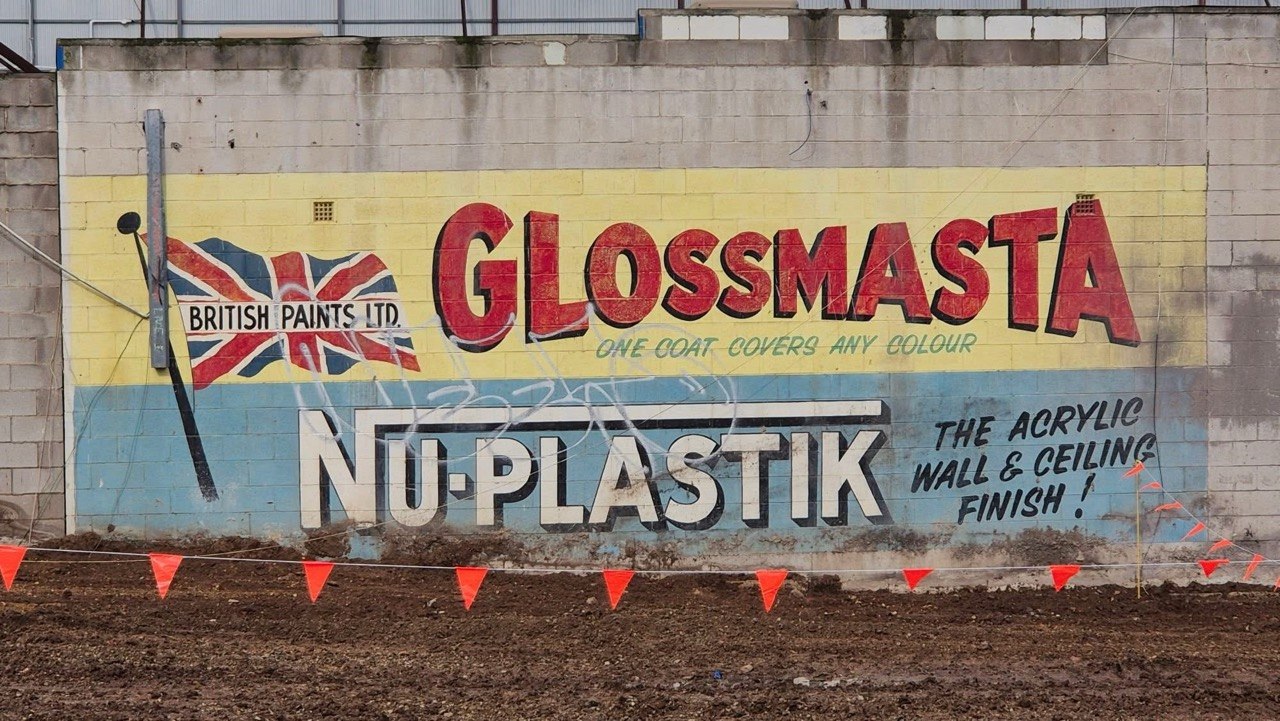
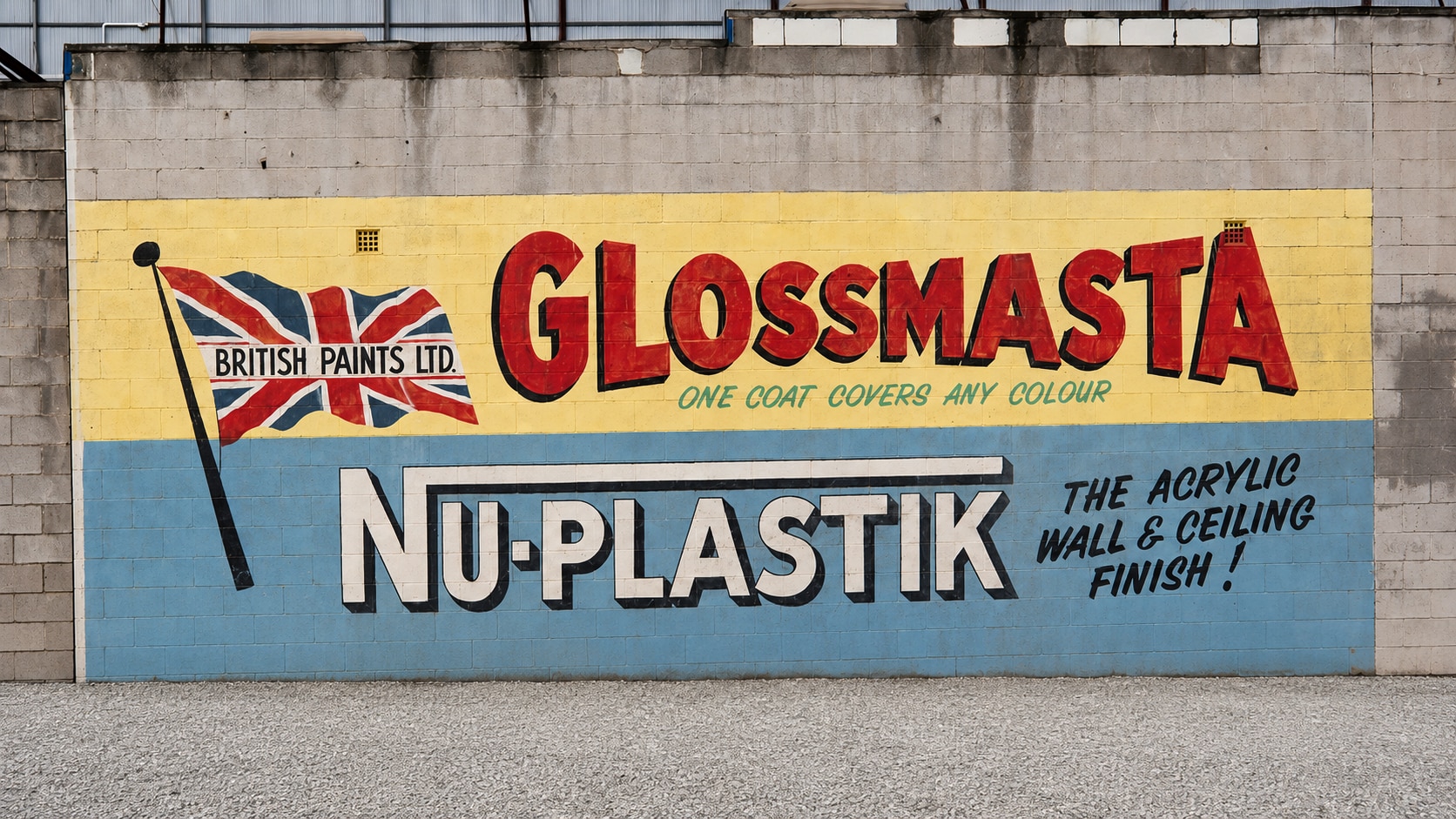
The second mural is equally striking. Painted against a yellow and light-blue background, it features the Union Jack logo of British Paints Ltd., the large red word GLOSSMASTA, the slogan “One coat covers any colour”, and below it NU-PLASTIK — described as “The acrylic wall & ceiling finish!”
British Paints established a strong presence in Australia after the Second World War. By the 1950s and 1960s the company was operating modern factories (including a major plant at Padstow in New South Wales) and producing a wide range of paints under several brand names.
Glossmasta was marketed as a high-coverage gloss paint that could cover any colour in a single coat. Nu-Plastik (also advertised as Nu-Plastic) was one of the new generation of quick-drying acrylic finishes that arrived in Australia in the late 1950s and early 1960s. A 1961 television commercial for the product emphasised that it dried in just 15 minutes, required no undercoat, and left no lingering paint smell — revolutionary claims at the time.
British Paints later became part of the Berger group and is now owned by DuluxGroup (itself part of Nippon Paint Holdings). The British Paints brand continues to be sold in Australia today, mainly through Bunnings, though the specific mid-century product names Glossmasta and Nu-Plastik belong to a bygone era of paint marketing.
Why These Signs Matter
Ghost signs like these are more than just old advertisements. They are pieces of visual history that capture the design styles, brand names and everyday products of earlier decades. When a building is demolished and a long-hidden mural suddenly reappears, it offers a brief moment to reconnect with that past before the wall itself disappears.
Both of these signs appear to date from roughly the 1950s to 1970s — a golden age of hand-painted outdoor advertising in Australia. Their survival in such good condition is fortunate, and photographing them while they are still visible helps preserve their memory.
Have you spotted any other ghost signs around Adelaide or South Australia recently? I’d love to hear about them in the comments below.
AI Fun
I though ill make a before and after ChatGPT 5.6 Sol making a before and after the restore the image with some photoshop post processing for alignment.