I always thought Catch Me If You Can was basically a true story.
Not literally every scene, obviously. It is a Steven Spielberg movie. I assumed conversations had been invented, timelines compressed and events rearranged to make a better film.
But underneath all of that, I thought Frank Abagnale had actually done the extraordinary things the story was built around.
He had posed as a Pan Am pilot.
He had flown around the world.
He had forged millions of dollars in cheques.
He had pretended to be a doctor.
He had passed the Louisiana bar and worked as a lawyer.
And eventually the FBI caught him and turned his unusual talents towards fighting fraud.
That was the story I had absorbed.
I don’t remember consciously deciding that I believed it.
I just did.
And that distinction has been bothering me ever since I discovered how questionable much of the story actually is.
The Story Behind the Story
Frank Abagnale certainly existed, and he certainly committed fraud.
The FBI’s own historical material describes him passing bad cheques, eventually being arrested in France and later serving time in a United States federal prison.
So this isn’t a case where Hollywood invented a completely fictional man.
The strange part is what happens when we start examining the more spectacular claims.
Researcher Alan C. Logan went back through public records, prison records and contemporary newspaper reporting and found a version of Abagnale’s life that appears considerably less glamorous.
According to Logan’s research, Abagnale was incarcerated for significant portions of the period during which he later claimed to have been travelling around carrying out extraordinary international cons.
There was a real episode where he dressed as a TWA pilot. But Logan’s reconstruction suggests it lasted weeks rather than years. During that period he became involved with a flight attendant named Paula Parks and her family, eventually stealing cheques from the family that had welcomed him into their home.
That’s a very different Frank Abagnale.
Less Leonardo DiCaprio gliding through airports surrounded by flight attendants.
More small-time fraudster who was repeatedly caught and imprisoned.
What surprised me even more was that these doubts aren’t entirely new.
In 1978, journalists were already investigating Abagnale’s claims. They contacted banks, hospitals, universities and other institutions connected with stories he was telling publicly and struggled to verify them.
Then in December 2002, around the release of Spielberg’s film, the Los Angeles Times investigated the story again and described much of the source material behind the movie as unverifiable.
The filmmakers themselves weren’t claiming to have produced a documentary. The movie changed significant parts of the story for dramatic purposes.
So perhaps Hollywood didn’t exactly tell me:
“Everything you are about to see happened.”
But somehow I still walked away believing that the important parts had.
And that’s where this stopped being a story about Frank Abagnale for me.
I Never Remember Choosing to Believe It
What fascinated me was how little conscious thought seemed to be involved in establishing something in my mind as true.
There was a book.
There were television appearances.
There were newspapers talking about him.
There was a major Hollywood production.
Steven Spielberg directed it.
Leonardo DiCaprio played Frank.
Tom Hanks played the FBI agent chasing him.
The story had all the signals of something that had already passed through several layers of verification.
And somewhere along that chain, I think I unconsciously assumed:
Someone must have checked this.
That’s the part I keep returning to.
We tend to imagine believing something as an individual decision.
Someone presents a claim. We examine the evidence. We decide whether we accept it.
But much of what we believe doesn’t happen like that at all.
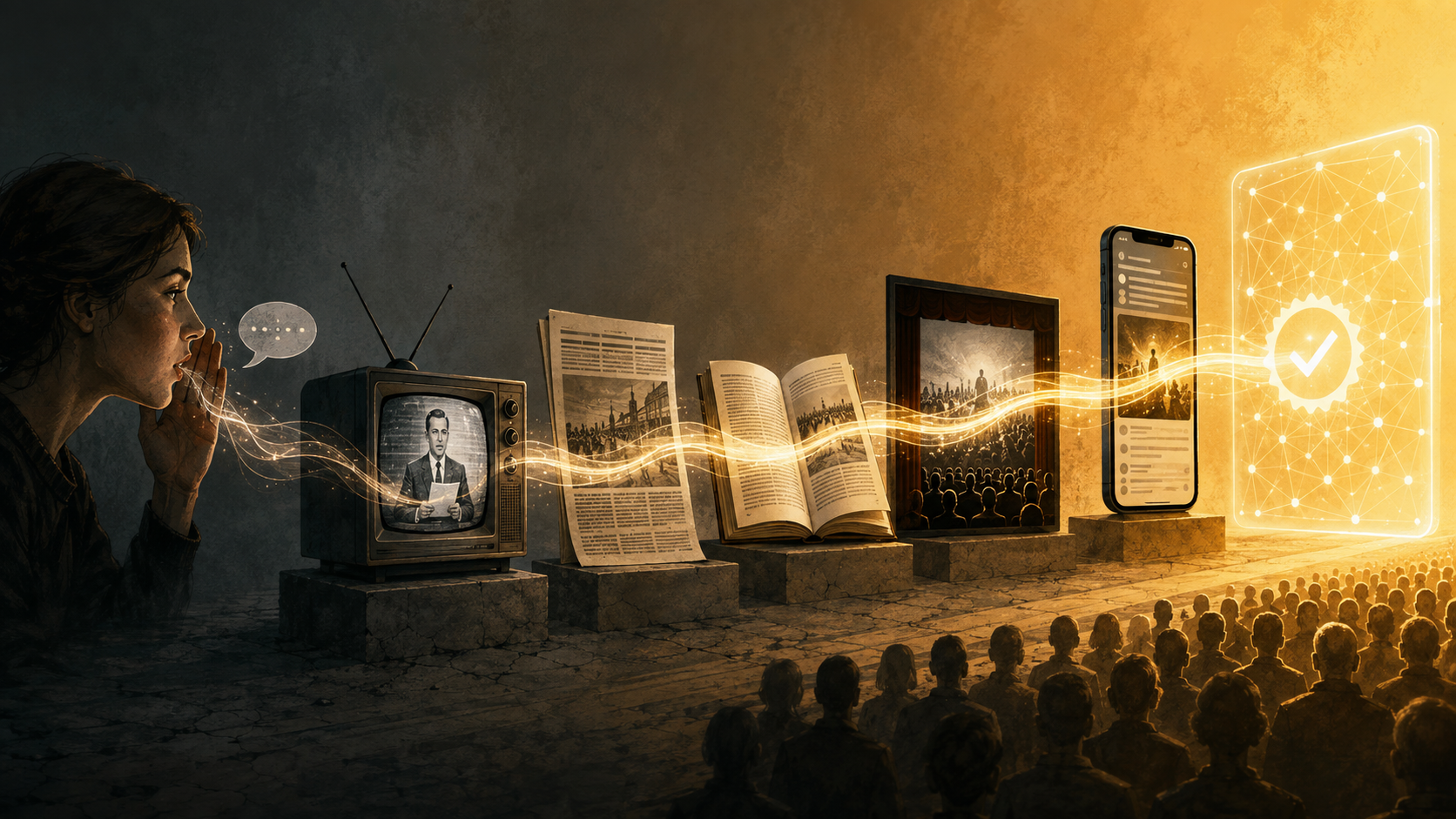
Instead, trust can move through institutions.
One person tells a story.
A television programme repeats it.
A newspaper describes it.
A publisher turns it into a book.
Other journalists refer to the book.
Hollywood adapts it.
Audiences watch the movie.
Eventually millions of people know the story.
But each new appearance of the claim can look like another piece of evidence, even when everyone may ultimately be drawing from the same original source.
I started thinking of this as a kind of cascade of truth.
Although perhaps cascade of belief would be more accurate.
The story moves from one trusted place to another until the fact that it is widely repeated starts to feel like evidence that it must be true.
Eventually we forget to ask where the chain began.
When Repetition Starts Looking Like Verification
This reminded me of the old telephone game.
A message moves from person to person and changes as it travels.
But what happened with Frank Abagnale seems even more interesting because the problem wasn’t necessarily that every person substantially changed the story.
The repetition itself gave the story authority.
Imagine hearing an extraordinary claim from one man standing on a street corner.
You might be sceptical.
Now imagine hearing essentially the same claim on national television.
Then reading it in a book.
Then hearing the man interviewed again.
Then seeing respectable organisations refer to him as a famous former conman.
Then watching an expensive Steven Spielberg movie about his life.
At some point, the question quietly changes from:
“Is this true?”
to:
“How could this possibly not be true?”
That’s a remarkable transformation.
And charisma seems to matter enormously.
Abagnale wasn’t merely presenting information. He was telling a wonderful story.
He was intelligent, articulate and apparently very convincing in front of an audience.
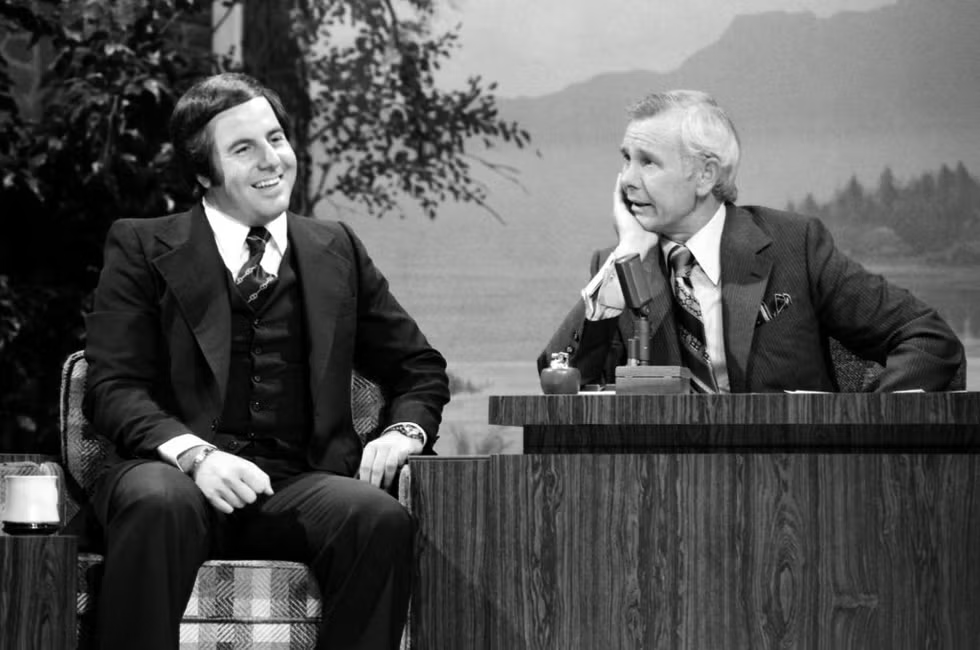
That makes me think about how easily humans can confuse the qualities of the messenger with the quality of the evidence.
Confidence feels like knowledge.
Specific detail feels like evidence.
Charisma feels like credibility.
And a compelling narrative makes us want to hear what happens next.
None of those things actually establish whether something happened.
Then I Started Thinking About Artificial Intelligence
At first I thought this was largely a story about an earlier information age.
Abagnale was telling these stories during the 1970s.
There was no internet.
Nobody sitting in the audience could pull a phone out of their pocket and immediately start checking prison records while he was speaking.
There was an obvious technological disadvantage.
My first reaction was almost:
Well, this couldn’t happen quite the same way now.
Then I reconsidered it.
We have vastly greater access to information today.
But access to information isn’t the same thing as access to truth.
In fact, the Frank Abagnale story made me wonder whether some of the underlying problem remains exactly the same.
Artificial intelligence makes this particularly interesting.
Language models aren’t simply counting how often a sentence appears on the internet and declaring the most repeated version true. The technology is more complicated than that.
But generative AI can still produce information that sounds convincing while being wrong.
That creates an uncomfortable connection with the Abagnale story.
Suppose an incorrect claim becomes deeply embedded in our information ecosystem.
Books repeat it.
Newspapers repeat it.
Websites repeat it.
People repeat it to one another.
Eventually those sources become part of the enormous body of human information from which future systems learn.
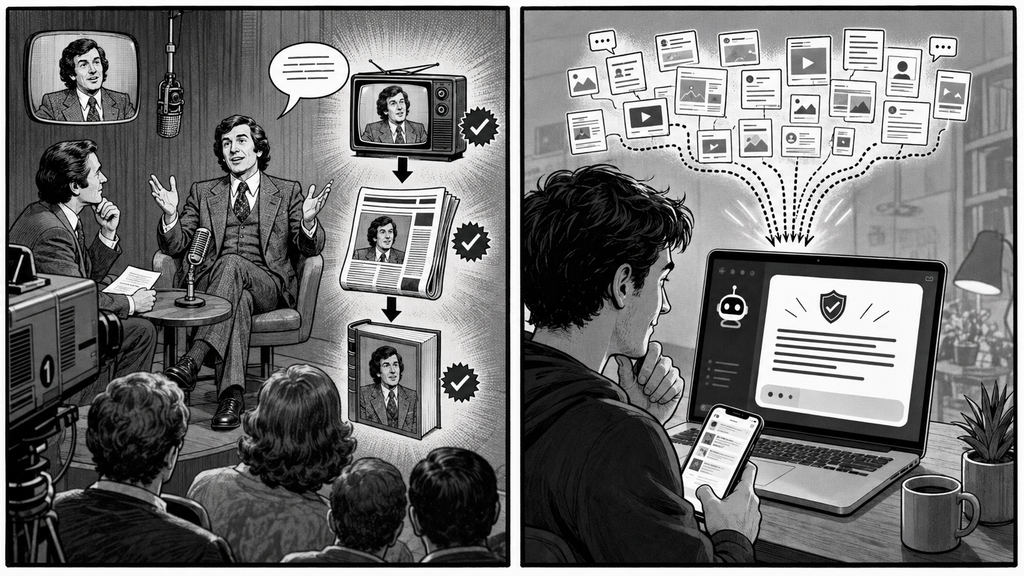
We tend to imagine AI as something standing outside human knowledge, checking it for us.
But AI inherits our information environment.
If that environment contains myths, misunderstandings and confidently repeated half-truths, then technology does not automatically make those problems disappear.
Sometimes it can help expose them.
Sometimes it can repeat them.
Which means the responsibility hasn’t disappeared.
The tools changed.
The human problem didn’t.
Nothing New Under the Sun
That’s when an old expression came back to me:
“There is nothing new under the sun.”
The phrase comes from Ecclesiastes and reflects on recurring patterns in human life.
I’m not taking that to literally mean nothing genuinely new ever happens.
Obviously technology changes.
The internet is new.
Artificial intelligence is new.
The speed at which information travels is extraordinary compared with the 1970s.
But the underlying human behaviour feels strangely familiar.
We tell stories.
We trust people.
We trust institutions.
We are persuaded by confidence.
We repeat things we believe other people have already verified.
We prefer memorable stories to messy collections of uncertain facts.
And eventually something can become so familiar that asking whether it is true begins to feel unnecessary.
Frank Abagnale didn’t need artificial intelligence to create that effect.
He needed a good story.
He needed charisma.
He needed people willing to repeat it.
And he needed each new audience to assume that somebody further back in the chain must have checked.
Technology has changed enormously since then.
Human nature hasn’t changed nearly as much.
The Part I Want to Remember
I don’t think the lesson I took from Catch Me If You Can is simply:
Don’t believe movies based on true stories.
That’s useful advice, but it isn’t really what stayed with me.
What stayed with me was something more unsettling.
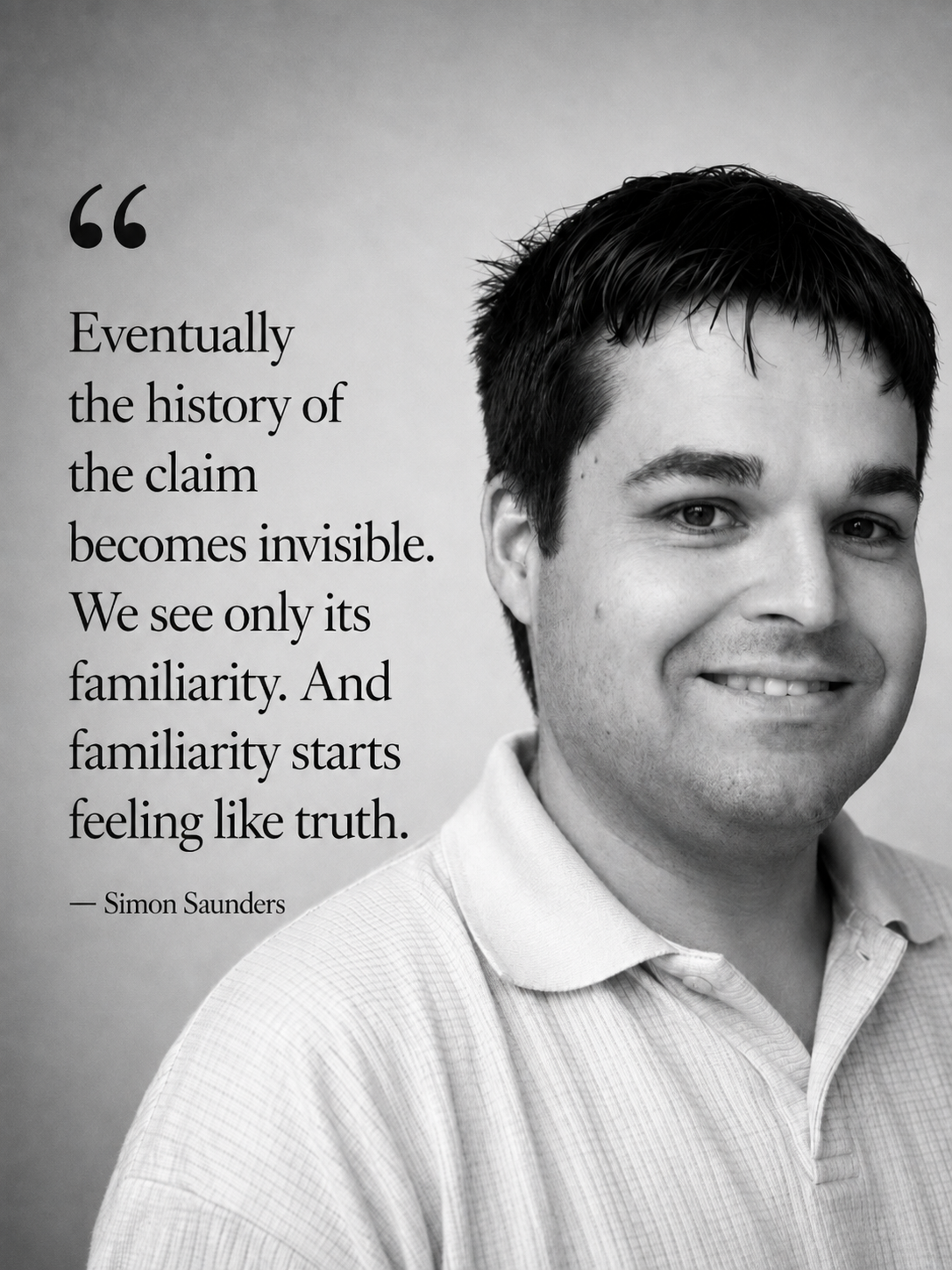
A surprisingly small amount of uncertain information can acquire an enormous amount of authority once enough people and institutions begin repeating it.
Eventually the history of the claim becomes invisible.
We see only its familiarity.
And familiarity starts feeling like truth.
That’s what changed for me.
I had never investigated Frank Abagnale.
I hadn’t examined his prison records.
I hadn’t checked newspaper archives.
I hadn’t compared the timelines.
I had simply inherited a story.
And because that story had travelled through enough places I trusted, I didn’t realise I was trusting it.
That distinction matters.
Because perhaps the most dangerous beliefs aren’t always the ones somebody aggressively convinces us to accept.
Sometimes they’re the ones that arrive so quietly that we never remember deciding to believe them in the first place.
And that may be as true in the age of artificial intelligence as it was when Frank Abagnale first stepped onto a television stage.
There really may be nothing new under the sun.
Only new ways for an old human tendency to express itself.
Sources and Further Reading
- FBI — “Investigating Financial Crime”
Background on Abagnale’s cheque fraud, arrest and imprisonment.
https://www.fbi.gov/news/stories/investigating-financial-crime - WHYY / The Pulse — “Could this famous conman be lying about his story?”
A useful overview of Alan C. Logan’s investigation into Abagnale’s claims and the documentary evidence challenging his famous story.
https://whyy.org/segments/the-greatest-hoax-on-earth/ - Los Angeles Times — “The truth? Just try to catch it if you can” — December 28, 2002
Contemporary reporting examining the difficulty of verifying many of Abagnale’s claims around the time Spielberg’s movie was released.
https://www.latimes.com/archives/la-xpm-2002-dec-28-et-baker28-story.html - NIST — Artificial Intelligence Risk Management Framework: Generative AI Profile
Discussion of generative AI producing confidently stated but false information.
https://www.nist.gov/itl/ai-risk-management-framework - OpenAI — “Why Language Models Hallucinate”
Background on why language models can sometimes generate plausible but incorrect answers.
https://openai.com/index/why-language-models-hallucinate/ - Ecclesiastes 1:9
Source of the phrase “nothing new under the sun.”