How entertainment kept its intellectual property while slowly forgetting how it learned to tell stories
I didn’t set out to write an article about the death of Hollywood.
The thought started while listening to actress Patricia Heaton being interviewed by Andrew Gold on Heretics. Heaton, best known for Everybody Loves Raymond and The Middle, was asked whether comedy was dying in Hollywood.
Her response was much broader:
“Hollywood’s dead.”
What interested me was what she blamed first.
It wasn’t politics.
Heaton talked about the pandemic, the writers’ and actors’ strikes, productions moving because of costs, streaming, shrinking writers’ rooms and shorter television seasons. Where television once routinely produced 22 or 24 episodes in a season, streaming might produce eight. Stable series jobs have become harder to come by, and she described an industry that had broadly “imploded”.
Her conclusion was important: it was “not so much political as it is economic.”
But the longer I listened, and the more I thought about the television and films I have watched over the years, the more I wondered whether something larger had happened.
Hollywood hasn’t simply become smaller.
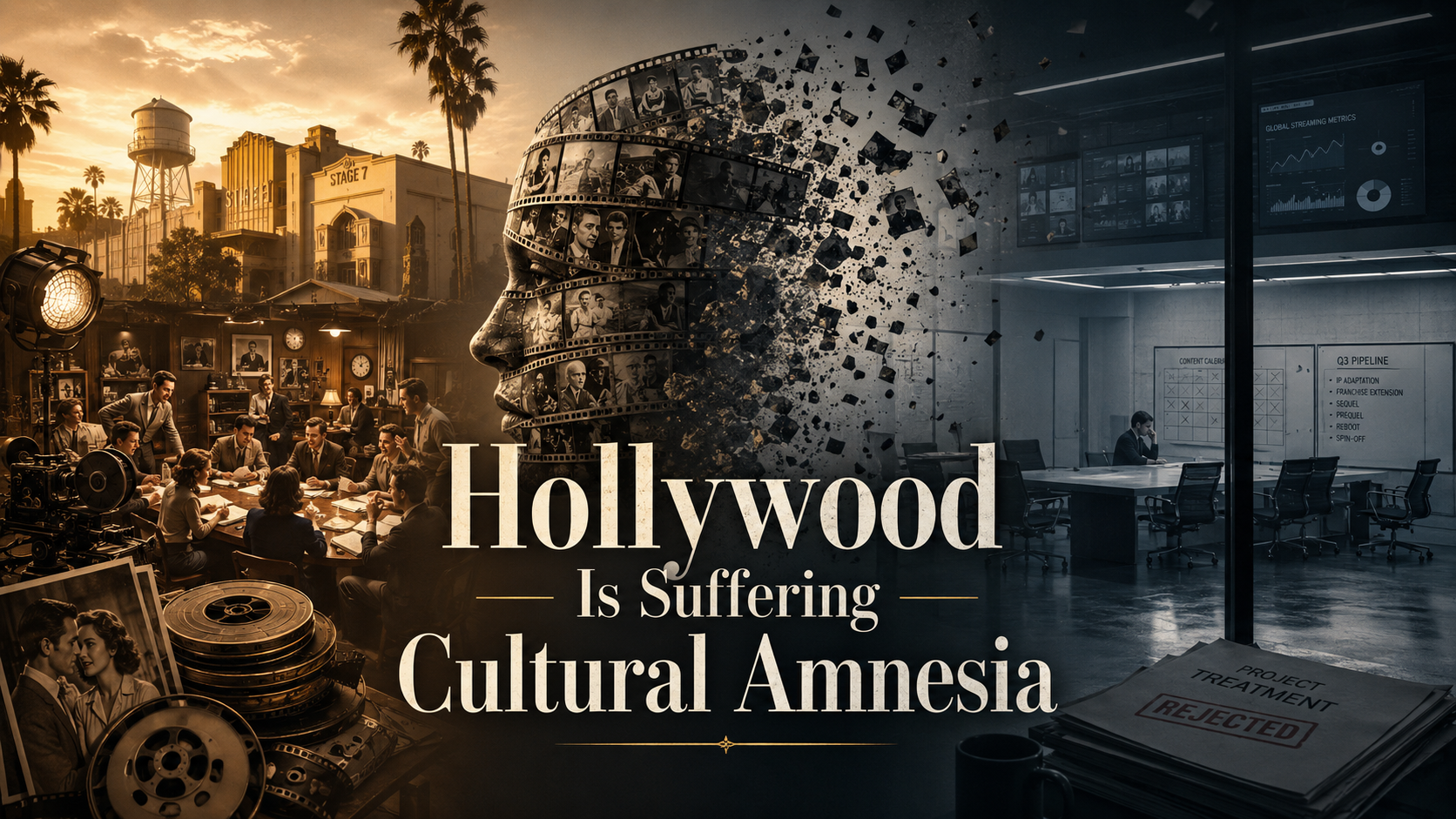
I think it may be suffering from cultural amnesia.
What does it mean for an industry to lose its soul?
One of the most striking parts of Heaton’s interview had nothing to do with politics.
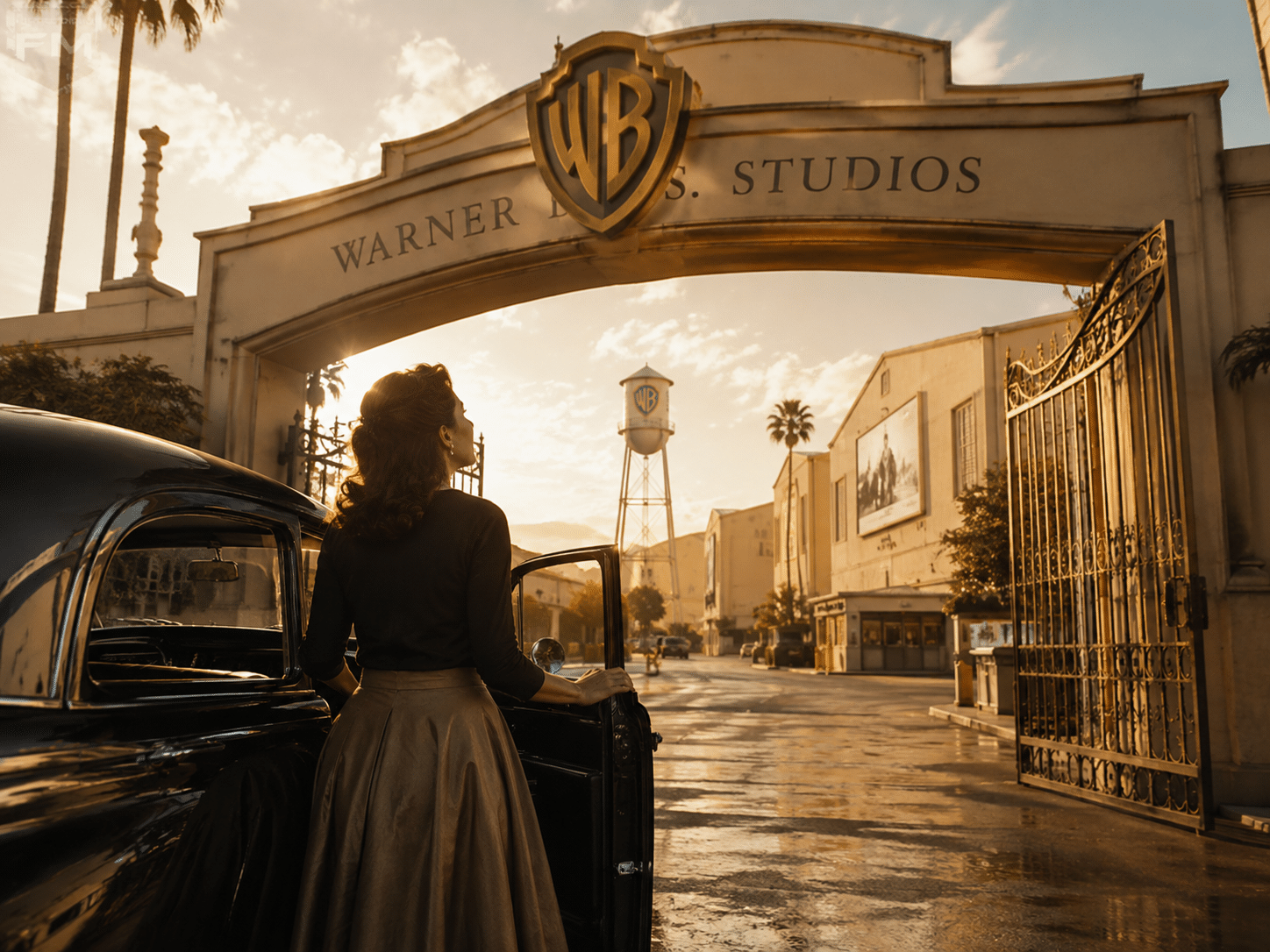
She described arriving at Warner Bros during the Everybody Loves Raymond years and being almost overwhelmed that this was where she got to work.


She had grown up in Cleveland. Suddenly she was eating at the Warner Bros commissary and seeing Michael Keaton driving the Batmobile through the studio lot.
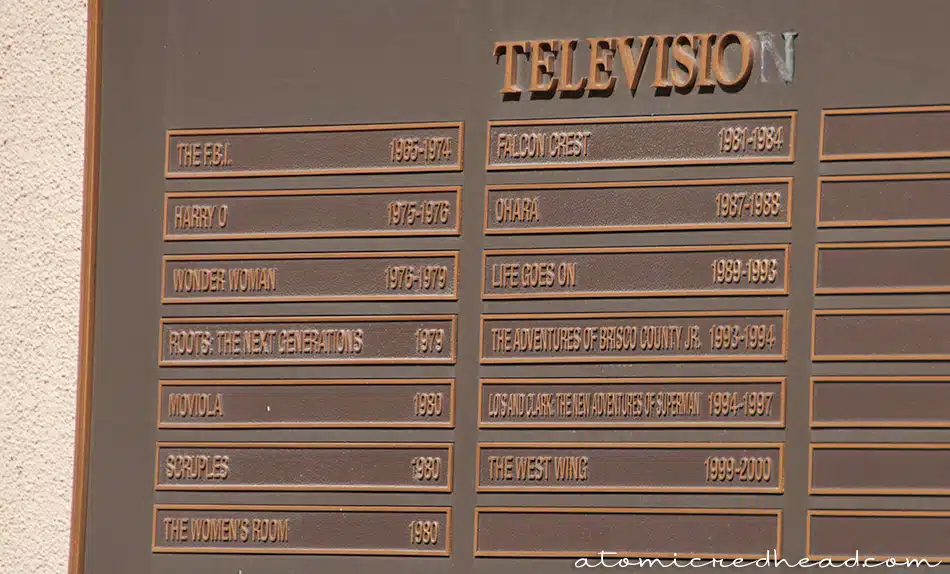
On the sound stages were records of the famous films that had been made there before her.
She was entering a place with a memory.
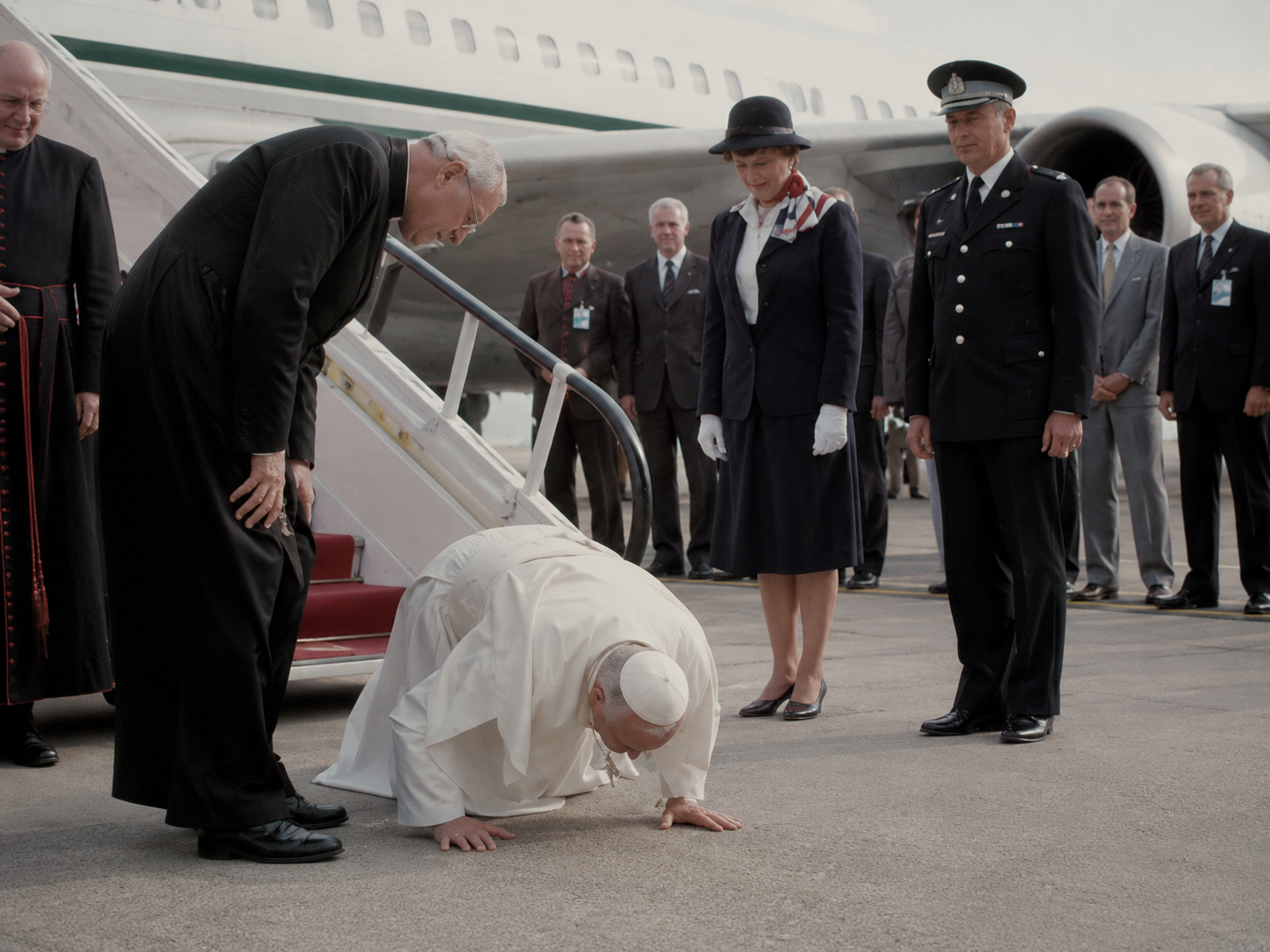
Heaton compared getting out of her car at Warner Bros to Pope John Paul II kissing the ground. She knew generations of people had created things there before she arrived.
That description stayed with me.
We tend to think of a film studio as a company.
But the great studios were also institutions.
They accumulated people, traditions, habits, skills, relationships and experience. Someone entering Warner Bros wasn’t simply joining an employer. They were walking into machinery that had been refined over generations.
That’s what I mean by the old Hollywood having grandeur.
It wasn’t merely beautiful buildings and famous gates.
It was grandeur produced by accumulation.
People learned from people who had learned from the people before them.
And that sort of accumulated knowledge is extremely difficult to put on a balance sheet.
Which may be precisely why it is so easy to accidentally destroy.
The apparent waste that may have made Hollywood great
Heaton describes another feature of old television that sounds extraordinary today.
A network might order 15 or 20 pilots.
It would actually make them.
Most would fail.
Perhaps two or three would work.
But out of that kind of system came programmes such as Friends, Cheers, Seinfeld, Everybody Loves Raymond and The King of Queens.
From the perspective of modern corporate efficiency, this looks horribly wasteful.
Imagine paying writers, actors, directors, camera crews, designers and technicians to create 20 programmes knowing perhaps 17 of them will go nowhere.
But perhaps we’ve misunderstood what the waste was doing.
Those failed pilots weren’t producing nothing.
They were training writers.
Training directors.
Training actors.
Testing ideas.
Discovering people.
And teaching everybody involved what didn’t work.
The same applies to those old 22-episode television seasons.
Twenty-two episodes isn’t merely more entertainment for the viewer.
It’s 22 opportunities for a young writer to watch a story get broken apart and reconstructed.
Twenty-two opportunities to see dialogue that sounded wonderful on paper die when an actor actually tried to say it.
Twenty-two opportunities to watch an experienced writer identify a story problem that a younger writer didn’t even realise existed.
Repeat that for several seasons and you have something remarkably similar to an apprenticeship.
Modern industry figures show just how different the environment has become. The Writers Guild of America reports that the vast majority of streaming series now run between seven and 12 episodes. Median streaming rooms contain eight writers for half-hour shows and seven for one-hour shows. Network programmes with 13 or more episodes have median staffs of 12 and nine respectively. (Writers Guild of America West)
The 2023 WGA agreement even introduced minimum staffing and requirements keeping writers employed through parts of production. For certain streaming and pay-TV series, two writer-producers in addition to the showrunner must remain employed during production. (Writers Guild of America West)
That’s significant.
Part of the industry’s apprenticeship structure had weakened enough that the writers’ union negotiated rules to preserve some of it.
Screenwriter employment itself has contracted. WGA data comparing the first three quarters of 2022 and 2024 shows the number of working screenwriters falling from 1,947 to 1,651, about 15 per cent. (Writers Guild of America West)
The danger isn’t that seven writers can’t produce a masterpiece.
Of course they can.
The danger is that fewer people are moving through the environment that turns promising writers into experienced writers.
The people were part of the infrastructure
This became one of the biggest realisations for me.
If Warner Bros demolishes a soundstage, everyone can see what has disappeared.
There’s rubble.
There’s a photograph of the building before it went.
There’s something tangible to mourn.
But suppose a 58-year-old comedy writer with 30 years of experience simply stops sitting beside a 27-year-old writer.
Nothing visibly disappears.
No building comes down.
There is no demolition permit.
But decades of tacit knowledge may stop moving from one generation to another.
The experienced writer knows things that might never appear in a screenwriting textbook.
Why a scene feels two beats too long.
Why audiences will forgive one character for something but hate another character for exactly the same behaviour.
Why a joke needs to be moved three lines earlier.
Why a character cannot plausibly make a particular decision yet.
Why a subplot needs to disappear.
How to recognise that the real story accidentally appeared in the second draft.
That knowledge is part of the industry’s infrastructure too.
And once the chain between generations is broken, rebuilding it is much harder than rebuilding a soundstage.
John Cleese saw part of this coming years ago
This isn’t an entirely new complaint.
Back in 2009, John Cleese was already arguing that television wasn’t investing sufficiently in writers.
He said there was enormous talent available but that writing wasn’t as good as it once had been. He specifically suggested writers might lack experience and criticised television being run increasingly around money and fragmented audiences. (The Guardian)
Then he said something remarkably relevant to this whole discussion:
“It was wonderful because there wasn’t the fear.”
His argument was that once broadcasters become anxious, they tighten up, start measuring everything and become reluctant to trust experienced creative people to use their instincts. (The Guardian)
That was 2009.
Long before today’s arguments about diversity policies, streaming mini-rooms or cancel culture had reached their current intensity.
That’s important because it tells me the problem cannot simply be:
Hollywood became politically progressive.
There was already an economic and institutional problem developing.
Money.
Fear.
Measurement.
Reduced investment in writers.
Less experience.
More reluctance to let creative people take risks.
Those conditions were already emerging.
Other cultural changes were later layered on top of them.
The audience used to be part of the machinery
Patricia Heaton then mentioned something I initially overlooked.
Everybody Loves Raymond was performed in front of a real studio audience.
The cast rehearsed for four days like a stage play. On the fifth day an audience arrived, and four or five cameras recorded the performance. Heaton describes doing a little play every week and says:
“You feel the difference.”
Think about what that means for writers.
A room full of intelligent people could spend four days convincing themselves that a joke was hilarious.
Then hundreds of people arrived.
And nobody laughed.
There was nowhere to hide.
Conversely, some throwaway line the writers barely noticed might cause the audience to erupt.
Now imagine being a young comedy writer receiving that feedback week after week.
You aren’t only being taught by the senior writer.
The audience is teaching you too.
And that matters if a writers’ room becomes culturally homogeneous.
The problem doesn’t particularly matter whether everyone is progressive or conservative, religious or atheist.
Any sufficiently homogeneous group can develop shared blind spots.
Everyone knows which opinions receive approval.
Everyone knows which jokes their peers find funny.
Everyone understands the same cultural references.
Everyone begins reinforcing everyone else’s assumptions.
A live audience punctures that bubble.
Old television had a remarkable number of these corrective mechanisms.
Experienced writers challenged younger writers.
Younger writers brought new ideas.
Actors tested dialogue.
Large rooms tested stories.
Long seasons created repetition.
Live audiences immediately told everyone whether something actually worked.
Remove several of those mechanisms simultaneously and creators can become increasingly isolated from the people they’re supposedly entertaining.
Hollywood begins talking at its audience instead of talking with it.
Fawlty Towers and the loss of context
John Cleese provides another example of cultural amnesia, but from a completely different direction.
In June 2020, UKTV temporarily removed the famous Fawlty Towers episode “The Germans” from its streaming service while reviewing it because it contained racial slurs. The episode was subsequently restored with additional warnings about potentially offensive language and content. (The Guardian)
The distinction matters.
It wasn’t permanently banned.
But the initial instinct was still interesting:
remove the work, then decide how modern audiences should be allowed to encounter it.
Cleese’s response went directly to something we’ve been discussing throughout this article: context.
The racial remarks in question come from Major Gowen, an elderly, pompous character whose attitudes are themselves part of the joke.
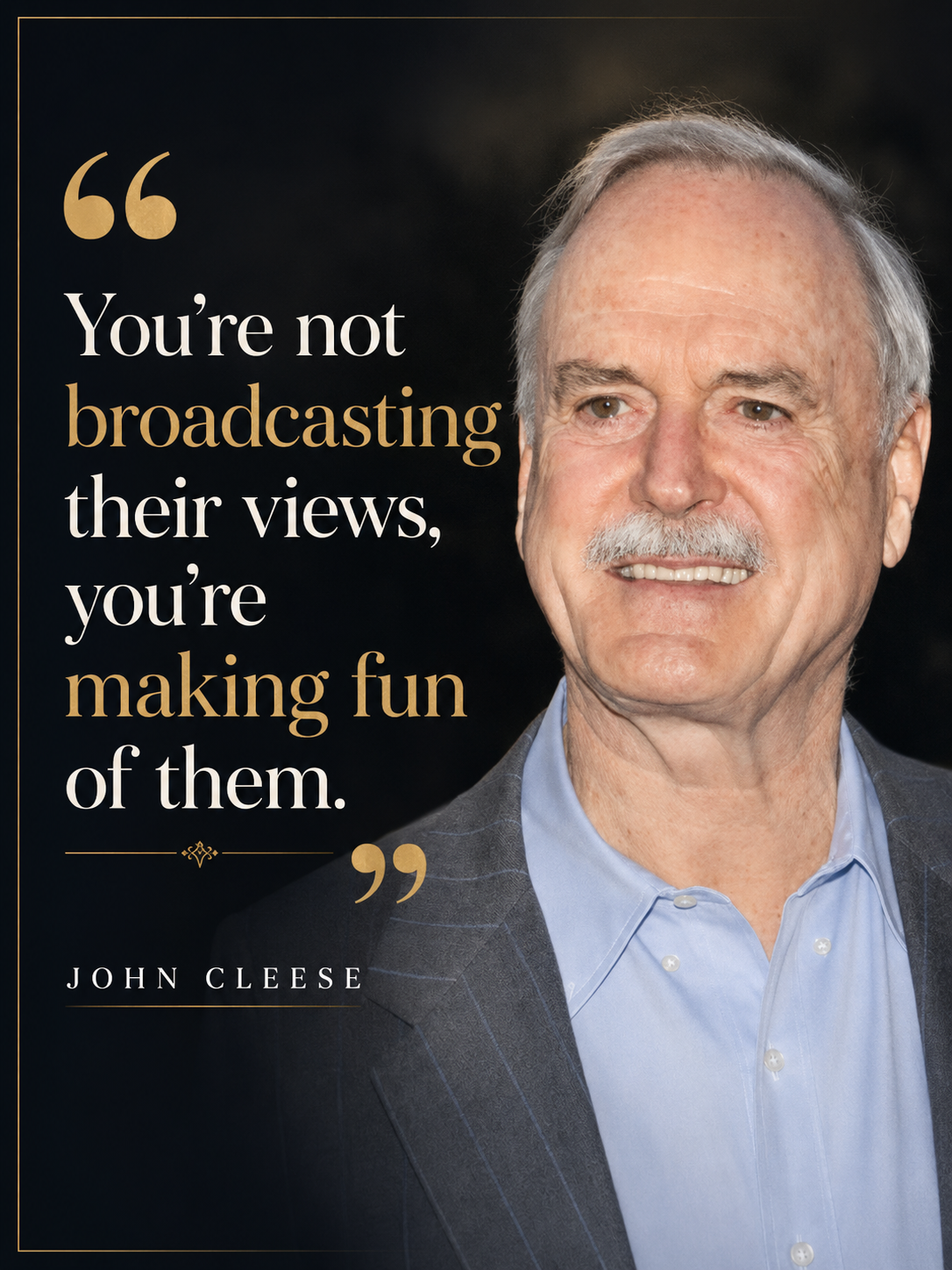
Cleese argued:
“You’re not broadcasting their views, you’re making fun of them.”
His point was that presenting an offensive idea through a ridiculous character is not necessarily endorsing the idea. The character can be the target. (The Guardian)
That’s storytelling 101, really.
Characters aren’t required to believe what the author believes.
A racist character does not automatically make the story racist.
A homophobic character does not automatically make the writer homophobic.
A selfish character doesn’t indicate support for selfishness.
A murderer appearing in Columbo does not mean the creators favour murder.
Stories require the ability to depict something without endorsing it.
And that’s why the Fawlty Towers incident fits so neatly beside Patricia Heaton’s story about the Marine who didn’t like hugging.
In Heaton’s account, younger writers thought the character’s discomfort could be interpreted as homophobic. Older writers objected that the discomfort was the starting point from which the character was supposed to grow.
The two examples contain the same underlying problem:
What happens when we judge the moral acceptability of a fictional moment before asking what function that moment performs in the story?
That can flatten storytelling enormously.
If characters must already be good, they have nowhere to go
This is one of the ideas from Heaton’s interview that resonated most strongly with me.
A character needs somewhere to start.
Sometimes that starting point should be uncomfortable.
They might be prejudiced.
Cowardly.
Naive.
Arrogant.
Sexually insecure.
Greedy.
Religious.
Anti-religious.
Emotionally closed.
Promiscuous.
Old-fashioned.
Radical.
Or simply wrong.
That’s where stories come from.
The Marine who cannot comfortably hug another man might eventually learn something.
Or perhaps he won’t.
Maybe the gay character confronting him discovers that he had misunderstood the Marine too.
Maybe both characters change.
Maybe neither does.
That’s drama.
But if the writer says:
We cannot allow the character to begin there because audiences may interpret his behaviour incorrectly,
then the character is being required to possess the correct worldview before his journey has begun.
You haven’t made storytelling safer.
You’ve removed the story.
Context is not endorsement
This is where Cleese’s criticism of political correctness becomes more interesting than the usual culture-war shouting.
In 2020 he argued that political correctness began from a perfectly decent instinct — don’t be unnecessarily cruel to people — but could become excessive when society organised itself around whoever was most easily offended.
He connected that directly to creativity, arguing that constantly worrying about which words can be used can restrict creative freedom and that words depend upon context. (The Guardian)
That last point matters enormously.
Context is storytelling.
Consider Fawlty Towers.
Basil Fawlty isn’t a behavioural instruction manual.
He’s a terrible hotel manager.
He’s snobbish.
Cowardly.
Dishonest.
Petty.
Explosive.
That’s why he’s funny.
We’re not being told:
Be like Basil.
We’re watching a man create disasters from his own personality.
Remove his flaws and you haven’t improved Basil Fawlty.
You’ve eliminated Basil Fawlty.
And this is where attempts to protect modern audiences can accidentally become strangely patronising.
Adults are capable of understanding:
“This character believes something unpleasant.”
They are also capable of understanding:
“The programme wants me to laugh at this character for believing it.”
We shouldn’t automatically assume audiences are incapable of distinguishing depiction from endorsement.
Cultural amnesia isn’t simply forgetting old movies
This is where the phrase cultural amnesia really began making sense to me.
It doesn’t mean nobody remembers Casablanca, Psycho or Fawlty Towers.
The archives remain.
Hollywood possesses enormous quantities of its own history.
The question is whether it remembers why those things worked.
Steven Spielberg describes his own education beautifully.
He didn’t attend film school.
He says he was self-taught, but then immediately corrects the idea that he had no teachers.
His teachers were Lubitsch, Hitchcock, Kurosawa, Kubrick, John Ford, William Wyler, Billy Wilder and other great filmmakers.
He describes Hollywood and international cinema as his “cultural heritage.” (freshairarchive.org)
I find that attitude fascinating.
It’s essentially:
These people knew things I don’t know yet.
So you study them.
You don’t have to believe Hitchcock was morally perfect.
You don’t have to approve of every attitude contained in a John Ford film.
You don’t have to recreate the social world of 1955.
But before discarding what those filmmakers did, perhaps understand what they knew.
How did Hitchcock manipulate information?
How did Wilder structure dialogue?
Why does Ford know exactly when to hold a shot?
What makes a character memorable after 70 years?
How did they create tension without enormous visual-effects budgets?
How did they make audiences care?
That’s inherited craft.
What happens when inheritance becomes interrogation?
Modern film education has also developed another valuable tradition: examining the assumptions buried inside older works.
Race.
Sex.
Power.
Class.
Colonialism.
Representation.
Whose experiences were excluded.
Those are legitimate areas of study.
Academic work on decolonising film education explicitly discusses moving curricula away from traditional film canons and towards alternative concepts and previously marginalised histories. (UCL Discovery)
And modern screenwriting programmes openly combine conventional storytelling instruction with social-justice and representation concerns.
Loyola Marymount University’s screenwriting learning outcomes, for example, require students to demonstrate character development, structure, dialogue, tone and theme, while also valuing diverse stories dealing with social-justice and humanistic issues. (sftv.lmu.edu)
That’s worth emphasising because I don’t want to make a lazy argument that universities have stopped teaching storytelling.
The evidence doesn’t support that.
But there is still a potential danger in how someone relates to the past.
If the first question becomes:
“What is wrong with this old work?”
rather than:
“Why was this old work so extraordinarily effective?”
then it is possible to become very sophisticated at analysing the moral limitations of your predecessors without acquiring their artistic abilities.
And here’s a sentence I keep coming back to:
You can morally surpass your predecessors while still being artistically inferior to them.
Progress in one dimension does not automatically create progress in another.
Representation can increase while human diversity decreases
This brings me back to modern characters.
I don’t have a problem with gay characters.
Or trans characters.
Or racial minorities.
Or religious characters.
Or atheists.
Or unconventional families.
Or conventional families.
The interesting question is whether they’re people.
A programme could theoretically contain ten characters representing ten different demographic groups while giving every one of them essentially the same worldview.
They use the same moral vocabulary.
They agree about the same cultural issues.
They make the same judgements.
They regard the same lifestyles as enlightened and the same lifestyles as backward.
On paper, that programme is extraordinarily diverse.
Psychologically, it can be remarkably narrow.
Real human diversity is much stranger.
A gay conservative.
A Catholic mother.
A progressive businessman.
An atheist who believes deeply in marriage.
An immigrant who loves his adopted country.
Another immigrant who hates it.
Someone sexually liberated who is miserable.
Someone deeply traditional who is wonderfully happy.
Someone who believes exactly the opposite.
And every one of them should be allowed to be intelligent sometimes and ridiculous sometimes.
Characters aren’t representatives at the United Nations.
They’re human beings.
When the character starts serving the writer

This is something I noticed watching Not Dead Yet.
In its first season, Nell felt to me like someone rebuilding herself.
Her life had fallen apart. She wanted love, stability and belonging. The ghosts she encountered while writing obituaries became part of her own process of understanding what she wanted.
Later I began feeling the character drifting.
Not because Nell changed.
Characters should change.
It was because I stopped feeling that Nell herself had caused the change.
She increasingly felt to me like a generic independent “girl boss” character rather than the woman whose emotional journey I had started watching.
That’s subjective.
But something useful comes out of it.
There is a huge distinction between:
“Because of what Nell experienced, Nell changed.”
and:
“The writers now want Nell to represent something different.”
The series’ ratings did decline substantially in its second season. It averaged about 2.7 million Live+7 viewers, down 21 per cent from its first season, with its 18–49 rating down 40 per cent. ABC subsequently cancelled it. (TVLine)
That doesn’t prove viewers rejected the direction I personally disliked.
It would be dishonest to claim that.
But it illustrates the distinction that matters to me:
transformation has to be earned.
A character has to earn their transformation
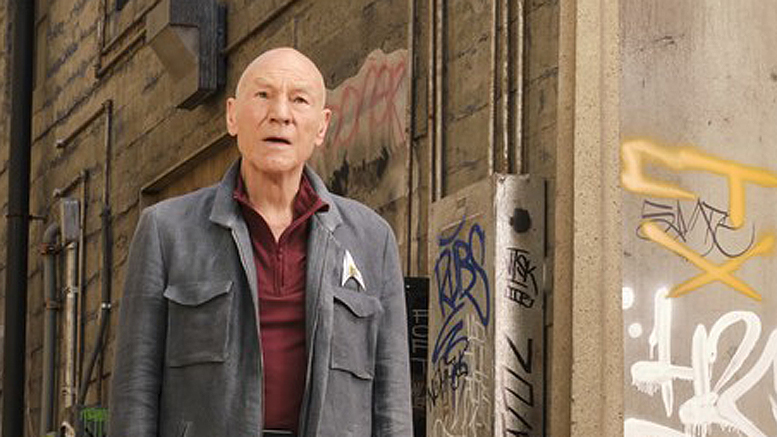
Jean-Luc Picard can become a broken man.
Nell can decide she doesn’t want the life she once wanted.
The Doctor can be radically different from previous Doctors.
Star Trek can reinvent itself.
But show me the journey.
Make me believe that this particular person, because of these particular experiences, arrived at this particular place.
Otherwise I stop watching the character make a decision.
I start watching:
a writer make the character make a decision.
And the spell breaks.
Lore isn’t trivia
That also explains some of my frustration with long-running franchises.
I don’t believe Star Trek should simply imitate the original series forever.
The Next Generation proves the opposite.
It changed the century.
The ship.
The captain.
The characters.
The rhythm.
Much of the storytelling.
Yet it still felt like a genuine evolution of the same universe.
That’s the difference between changing something from inside its logic and imposing something upon it from outside.
Lore isn’t merely knowing how many decks the Enterprise has.
Lore creates constraints.
The Federation has developed certain beliefs.
Vulcan culture works in particular ways.
Previous events happened.
Later events therefore carry consequences.
Those constraints don’t suppress creativity.
They give creativity something to push against.
A fictional world also has a spirit

There’s something even harder to define than lore.
The moral atmosphere of a fictional universe.
Classic Star Trek dealt with racism, authoritarianism, war, religion, prejudice and enormous political questions.
It wasn’t apolitical.
But beneath much of it was optimism.

Humanity could improve.
Logic mattered.
Diplomacy mattered.
Curiosity mattered.
Different cultures could learn to understand one another.
The future could be better than the present.
You can technically obey every piece of Star Trek continuity while losing that spirit.
And conversely, you can completely reinvent its surface while preserving the thing that makes it recognisably Star Trek.
That’s why knowing a franchise’s Wikipedia page is not the same as understanding it.
Storytelling is architecture

One writer I kept thinking about during this discussion was Steven Moffat.
There’s an episode of Coupling called “The Girl with Two Breasts” in which Jeff encounters an Israeli woman and they cannot understand each other’s languages.
The episode eventually changes our linguistic perspective. The misunderstanding gets reconstructed so that the audience experiences the situation from the other person’s side.
The episode was written by Moffat. (Comedy)
What makes that memorable?
It isn’t a gigantic budget.
It’s architecture.
What does Jeff know?
What does she know?
What does the audience know?
When should information be withheld?
When should it be revealed?
How can something we already watched suddenly acquire a new meaning?
Moffat used larger versions of this approach throughout Doctor Who: mysteries accumulating, apparently insignificant details recurring, answers being deferred and storylines eventually converging.
Whatever someone thinks about every individual resolution, you could frequently feel a storytelling machine underneath the episodes.
That’s the sort of thing I mean when I say storytelling feels missing from some modern programmes.
A story isn’t simply interesting events happening consecutively.
There should be:
setup,
expectation,
consequences,
misdirection,
choices,
reversals,
revelations,
and payoff.
Characters should alter the plot.
The plot should alter the characters.
Something that looked unimportant three episodes ago should suddenly become important.
The writer should know more than the audience while giving the audience enough information to eventually put the pieces together.
That’s storytelling craft.
Shorter seasons aren’t automatically worse
This is where I don’t want to romanticise 22-episode television either.
Twenty-two bad episodes are still 22 bad episodes.
Eight episodes written brilliantly can be extraordinary.
Silo is a modern programme I’ve thoroughly enjoyed precisely because it demonstrates that intricate world-building, mystery and character development are still entirely possible.
So the ability hasn’t disappeared.
The concern is about how consistently the industry reproduces people capable of doing it.
A shorter season doesn’t automatically produce worse stories.
But fewer episodes mean fewer repetitions.
Fewer writers mean fewer apprentices.
Fewer productions mean fewer opportunities.
And removing writers from production means fewer opportunities to see the difference between writing something and actually making it work on screen.
Those effects accumulate.
What happens when optimisation eats the thing being optimised?
This brings everything back to economics.
I don’t believe streaming woke up one morning and killed Hollywood.
Most of the changes we’ve discussed make sense individually.
Why produce 22 episodes if eight keeps subscribers?
Why employ 12 writers if seven can deliver the scripts?
Why gamble on an unknown idea if you already own Star Trek, Marvel, DC, Star Wars or another globally recognised property?
Why invent something completely new when audiences already recognise The Lion King, Aladdin or Snow White?
Reuters reported in 2025 that Disney had produced ten live-action remakes over the preceding decade, with nostalgia, established brand recognition and profit potential helping explain the trend. (Reuters)
None of that is irrational.
That’s precisely what interests me.
Every decision can make sense by itself.
Yet enough individually rational efficiencies can collectively cannibalise the system that created your valuable assets in the first place.
Hollywood itself is physically shrinking
This isn’t merely a metaphor.
FilmLA reports that only 18.3 per cent of the scripted projects it studied for 2024 were filmed in Los Angeles, down from 21.9 per cent in 2022. (FilmLA)
Even more strikingly, annual television production in Greater Los Angeles fell to 7,716 shoot days in 2024 — a 58.4 per cent decline in only three years. (FilmLA)
That is a physical contraction of the ecosystem Patricia Heaton remembers.
People aren’t merely changing what gets made in Hollywood.
Less of the machinery is actually operating there.
And consolidation continues. Paramount Skydance’s proposed $110 billion acquisition of Warner Bros Discovery is currently facing opposition from California and other states, with regulators arguing further concentration could reduce competition and even affect the quality and quantity of content. (Reuters)
Again, a merger doesn’t write a bad screenplay.
But it’s part of the environment we’re examining.
Studios that once seemed like permanent cultural institutions increasingly look like assets that can be bought, combined, stripped, reorganised and sold.
The spreadsheet can’t see everything
Corporate management can measure:
22 episodes versus eight.
Twelve writers versus seven.
Los Angeles versus a cheaper production location.
Original idea versus proven franchise.
New property versus remake.
Cost per episode.
Subscriber acquisition.
International recognition.
All of those fit nicely into a spreadsheet.
What is harder to measure is:
What does a 27-year-old writer learn by sitting beside a brilliant 58-year-old writer for five years?
What’s the financial value of hearing 100 live studio audiences react to your jokes?
What will the writer of a failed pilot create ten years from now because somebody allowed them to fail today?
How much creative knowledge is transferred during a conversation at the Warner Bros commissary?
There isn’t an obvious cell for those things in Excel.
And yet they may have been part of the factory.
An optimiser can proudly report:
We made the factory 30 per cent more efficient.
Without realising that some of what they removed was the machinery that teaches people how to manufacture the product.
Disney’s Wish and remembering the symbols but forgetting the recipe
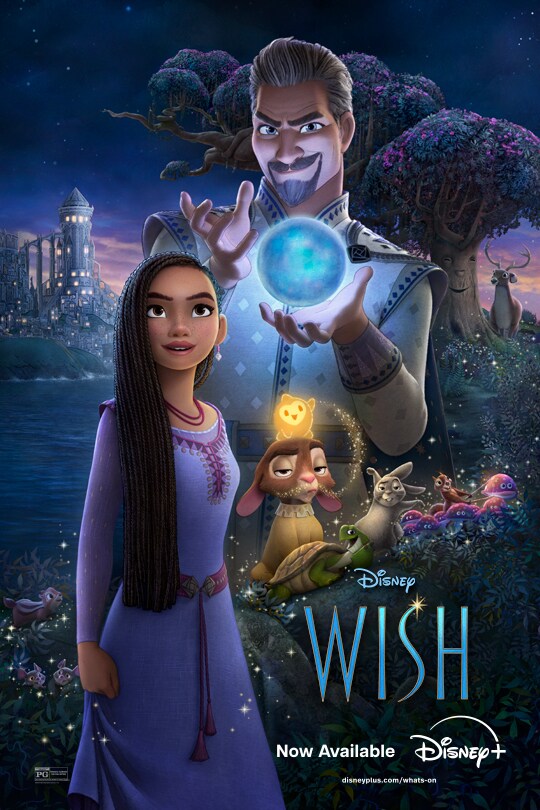
This is why Disney’s Wish bothered me.
It came from a studio celebrating its 100th anniversary.
If any organisation on Earth should possess accumulated knowledge about animated storytelling, surely Disney should.
Yet I came away thinking the story simply wasn’t very good and the music didn’t remotely have the quality I expected.
Professional critics broadly struggled with it too. Wish currently has a 48 per cent Rotten Tomatoes critics score. Their consensus is particularly appropriate to this argument: the film lovingly references Disney’s classics, but nostalgia cannot substitute for genuine storytelling magic. (Rotten Tomatoes)
That’s almost a perfect metaphor for cultural amnesia.
The references survived.
The iconography survived.
The wishing star survived.
The Disney name survived.
The archive survived.
But remembering what your predecessors created is not the same thing as remembering how they created it.
An organisation can own its legacy while losing parts of the culture that produced it.
This isn’t an argument against progress
I don’t want to romanticise old Hollywood.
There was discrimination.
Nepotism.
Bad television.
Terrible movies.
Lazy stereotypes.
Exploitative working conditions.
Plenty of rubbish deserves to remain forgotten.
Nor do I think gay characters, racial minorities, female writers or progressive politics destroyed Hollywood.
That explanation is far too simplistic.
Conservative entertainment can be every bit as preachy when characters exist merely to deliver the approved conservative message.
A sermon doesn’t stop being a sermon because I happen to agree with it.
My concern is storytelling.
Modern Hollywood appears to have changed several elements of its creative ecosystem simultaneously:
smaller seasons,
smaller rooms,
less contact between some writers and production,
less production in Los Angeles,
corporate consolidation,
greater dependence on existing IP,
changing attitudes towards the historical canon,
stronger institutional attention to representation,
reduced direct audience feedback,
and potentially weaker transmission of craft between generations.
No single item explains everything.
But stack enough of them together over several decades and eventually something starts to feel different.
We can become kinder without becoming culturally forgetful
This is where I think the Fawlty Towers example belongs in the bigger story rather than merely being another complaint about cancel culture.
There is nothing wrong with saying:
Some things made in 1975 would be expressed differently today.
Of course they would.
Culture changes.
But cultural progress shouldn’t require cultural forgetfulness.
We should be capable of watching an older work and holding two thoughts simultaneously:
That attitude belongs to another era.
and
That writer knew something extraordinary about comedy.
We can understand why a joke might make somebody uncomfortable without pretending the joke has no context.
We can reject the Major’s racism while understanding that Fawlty Towers was mocking him.
We can recognise historical stereotypes while studying why Cleese and Connie Booth could construct escalating farce so brilliantly.
We can criticise Hitchcock while learning suspense from Hitchcock.
We can disagree with John Ford while learning visual storytelling from John Ford.
We can build a more inclusive entertainment industry while learning everything possible from the people who built the industry before us.
Progress shouldn’t require starting civilisation again every generation.
Hollywood remembers the names but may be forgetting the recipes
Maybe that’s ultimately what Patricia Heaton was mourning when she talked about Warner Bros.
Not merely romantic buildings.
An ecosystem.
The soundstage told her who had worked there before.
Experienced writers worked beside younger writers.
Networks could afford to fail repeatedly looking for something exceptional.
Actors performed in front of real people.
Audiences laughed or didn’t.
Characters were discovered over hundreds of episodes.
Knowledge moved horizontally through a room and vertically between generations.
And everyone was participating in something larger than the individual production.
Heaton later talks about old Hollywood disappearing and says that despite living in Nashville herself, the idea of Paramount moving there feels strange because:
“It’s supposed to be in Los Angeles.”
I understand what she means.
Hollywood’s soul was never merely inside the Paramount gate.
It existed in the connections.
Between old and young.
Between writer and actor.
Between studio and audience.
Between experiment and failure.
Between the new production and the hundred years of productions before it.
Between creative freedom and the discipline required to make that freedom work.
Between history and somebody humble enough to learn from it.
Break enough of those connections and the corporation doesn’t necessarily die.
The logo remains.
The streaming service remains.
The catalogue remains.
The franchises remain.
The intellectual property becomes more valuable than ever.
You can remake the classics.
Produce sequels to the sequels.
Digitally reconstruct things from the past.
Feed decades of beloved intellectual property into increasingly sophisticated production machinery.
Hollywood can remember every character it owns.
Every trademark.
Every title.
Every franchise.
Every piece of content.
And still forget the recipe that taught generations of people how to create them in the first place.
That’s why I don’t think Hollywood is simply dying.
Hollywood is suffering cultural amnesia.
References and further reading
Primary source — Patricia Heaton: Heretics with Andrew Gold, “Patricia Heaton: I Had to Join Hollywood’s Secret Network.” The cleaned transcript supplied for this article was the starting point for Heaton’s comments about streaming, shorter seasons, shrinking writers’ rooms, Warner Bros, live studio audiences and changes in writers’ room culture.
Writers Guild of America — Staff Size Guide. Current figures on episode orders and median writers’ room sizes. WGA Staff Size Guide (Writers Guild of America West)
Writers Guild of America — 2023 MBA Writers’ Room Provisions. Minimum staffing, employment durations and writers-in-production requirements. WGA Showrunners’ Guide (Writers Guild of America West)
Writers Guild of America — Writer Employment Snapshot. Documents the decline in working screenwriters between 2022 and 2024. WGA Writer Employment Snapshot (Writers Guild of America West)
FilmLA — Scripted Content Study. Research on Los Angeles’ declining share of scripted production. FilmLA Scripted Content Study (FilmLA)
FilmLA — Los Angeles production decline. Reports a 58.4 per cent three-year reduction in television shoot days through 2024. FilmLA production report (FilmLA)
Steven Spielberg — Fresh Air interview. Spielberg discusses earlier filmmakers including Hitchcock, Kurosawa, Ford, Kubrick and Wilder as his teachers and cinema history as his film school. Steven Spielberg on learning from cinema history (freshairarchive.org)
John Cleese — state of television, 2009. Cleese discusses declining investment in writers, lack of experience, financial pressures and creative fear. Fawlty Towers reunion: Cleese on television and writing (The Guardian)
Fawlty Towers — “The Germans”, 2020. UKTV temporarily removed the episode while reviewing its racial language and subsequently reinstated it with additional contextual warnings. UKTV reinstates The Germans (The Guardian)
John Cleese — political correctness and creativity. Cleese’s comments on context, offensiveness and his concern that excessive sensitivity can restrict creative expression. Cleese on cancel culture and creative freedom (The Guardian)
Jyoti Mistry — “Decolonizing Processes in Film Education”. Academic discussion of shifting film education away from traditional canons and recovering excluded histories. UCL: Decolonizing Processes in Film Education (UCL Discovery)
Loyola Marymount University — Screenwriting learning outcomes. Illustrates how modern film education combines conventional story craft, character development and structure with diverse and social-justice-oriented storytelling. LMU Screenwriting Learning Outcomes (sftv.lmu.edu)
Academy of Motion Picture Arts and Sciences — Representation and Inclusion Standards. Best Picture eligibility currently requires qualifying films to satisfy two of four inclusion standards. Academy Representation and Inclusion Standards (Oscars)
Reuters — Disney live-action remakes. Analysis of the growth of remakes and the commercial value of nostalgia and familiar brands. Why are there so many live-action remakes? (Reuters)
Reuters — Paramount Skydance / Warner Bros Discovery. Current reporting on the proposed $110 billion acquisition and regulatory concerns about further Hollywood consolidation. California AG and Paramount-Warner merger (Reuters)
Rotten Tomatoes — Disney’s Wish. Critical reception and consensus regarding the film’s reliance on nostalgia versus storytelling. Wish critical reception (Rotten Tomatoes)
TVLine — Not Dead Yet. Season-two ratings decline and ABC’s cancellation of the series. Not Dead Yet cancelled after Season 2 (TVLine)
British Comedy Guide — Coupling: The Girl with Two Breasts. Episode details and Steven Moffat writing credit. The Girl with Two Breasts episode guide (Comedy)